
The soil is one of the largest stores of carbon on earth, with the top meter of soil globally holding more than three times the amount of carbon in the atmosphere. Carbon-rich soil supports diverse plant and animal communities and produces high agricultural yields.
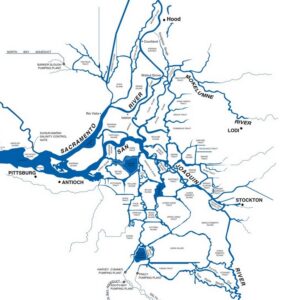 Sacramento – San Joaquin Delta
The Sacramento – San Joaquin Delta in California’s Central Valley has been severely manipulated and degraded, where levees where built to utilize the region’s incredibly rich soil for agriculture. The draining of those soils has led to significant carbon emissions and subsidence, increasing risk to the state’s water delivery infrastructure and reducing wildlife population sizes and biodiversity. The Earth Partners is utilizing a new carbon methodology and sustainable agricultural practices to help our partners develop projects that reverse subsidence, stop carbon emissions, and restore native habitats.
 The Earth Partners’ Soil Carbon Methodology
To quantify carbon sequestration in soil, The Earth Partners developed a comprehensive Soil Carbon Quantification Methodology, in partnership with Applied Ecological Services and validated by the Verified Carbon Standard. This measurement-based methodology builds upon previous model-based methods for quantifying soil carbon and has been tested and refined at more than twenty sites across several countries. The Earth Partners also developed a streamlined process to screen, stratify, sample, and calculate soil carbon levels with a high degree of confidence, allowing strong validation of environmental claims and supporting accurate greenhouse gas accounting.
Policy engagement: The Land Carbon Policy Roadmap
The Earth Partners partnered with Forest Trends to develop a long-term policy strategy for increasing land carbon sequestration through the publication of Building Carbon in America’s Farms, Forests, and Grasslands: Foundations for a Policy Roadmap.
This report heavily influenced the 2016 U.S. Mid-Century Strategy for Deep Decarbonization, a set of White House recommendations for policy, research, and innovation that describes how the United States can reduce its greenhouse gas emissions by 80% by 2050.